- Punch List Architecture Newsletter
- Posts
- Kicking the tires on car-free living in Arizona
Kicking the tires on car-free living in Arizona
Culdesac Tempe, held up as a model, is closer to a cautionary tale. Plus: a bumper crop of design exhibitions to open the year

Christopher Hawthorne
January 16, 2026

One of the pleasantly shaded, car-free walkways at Culdesac Tempe, with architecture by Opticos
Is America ready for car-free living? For car-free architecture?
Early reports from the Arizona desert, where an experimental development along these lines has been in the works for nearly a decade, were optimistic. Conor Dougherty, a housing reporter for the New York Times whose sensibility tilts in the supply-side, pro-developer direction—you might recall his recent essay “Why America Should Sprawl”— wrote about the project, Culdesac Tempe, in 2020. He identified it as “the first-ever car-free neighborhood built from scratch in the United States,” with the goal of helping to “retrofit American cities and end car ownership as we know it.”
In March of last year, as part of the “50 States, 50 Fixes” series in the Times, which catalogues promising responses to the climate crisis, his colleague Cara Buckley went to see Culdesac in person and came away impressed. She marveled at the way its buildings were configured “to maximize shade,” with “narrow pathways” that boost “social engagement” and eliminate asphalt, “reducing the urban heat island effect and improving conditions for the dogs that live there, too.” Most residential architecture in the U.S., she reported, remains organized entirely around the private automobile. Culdesac, positioned steps from a light-rail stop linking Tempe to Phoenix and requiring tenants to sign a lease amendment promising not to own or park their own cars within a quarter-mile radius, “broke that mold.”
My own visit to Tempe, on a warm afternoon in early December, left a different impression. As much as I found to admire in Culdesac’s ambition, and to a lesser degree its execution, it was clear to me that the car-dependent mold is very much intact, thank you very much, in Tempe as elsewhere across the American Southwest. Culdesac, it turns out, is less a model than a cautionary tale about the limits of the sort of urban change that’s driven not by community consensus or enlightened policymaking but by private developers selling a particular lifestyle. (However neatly that lifestyle happens to slot into a series like “50 States, 50 Fixes”!) Given the crushingly conventional residential developments that have emerged nearby in its wake, in fact, it’s hard to ignore the conclusion that this experiment in car-free living is the exception that proves the maddening hardiness of the rule.
And maybe it’s less of an exception than the marketing materials would have you believe. After stepping away from the light-rail stop and approaching it from the west, along Apache Boulevard, the first thing I noticed about Culdesac (produced by a larger company of the same name) was the vast size of its surface parking lot, with room for several dozen vehicles to bake in the sun. Buckley had described this as “a short-term parking lot for deliveries, retailers and guests,” but it also operates as a discordant gateway to the development—the equivalent of a vegetarian menu with an image of a porterhouse slapped on the cover.
I immediately wondered how many residents take advantage of this lot, on the down-low, for themselves, at least from time to time, maybe borrowing or renting a car to do so. I also wondered why a development that requires residents to forgo cars might not ask the same of their guests, to say nothing of retail tenants.

The sizable surface parking lot operates as an odd gateway for a famously “car-free” project. Up next from the same developers: a “car-lite” development in nearby Mesa
The second thing that occurred to me was that calling the development “a neighborhood” is a stretch, at least in its current form. The first phase of the project, designed by the Berkeley-based firm Opticos, includes 288 apartments and more than a dozen retail outlets, including a Korean grocery, a Mexican restaurant, a café, and a small plant shop, Maricopa Botanicals, where I snapped a photo of a miniature cactus wearing an even smaller Santa hat. This makes it closer in scale to a typical large apartment building than a thick slice of urban life. Fences and signage along the eastern edge of the property mark the location of future phases, set to take the total number of units past 750. (According to Culdesac founder and Opendoor alum Ryan Johnson, with whom I sat down briefly at the end of my tour, that second phase will likely be designed by a firm other than Opticos.) But for now the project is small enough to cover on foot in five minutes or so.
Don’t get me wrong: There are a lot of smart and pleasant touches in both the architecture and urban design of Culdesac. The residential buildings, three stories high, are huddled tightly together, producing admirable quantities of that much-advertised shade, with hints of Spanish Colonial Revival detailing. They are painted white, with breezeblock walls here and there. These touches both help keep the complex cool and connect it visually to architectural precedents as diverse as courtyard apartments in Southern California, Foster + Partners’ Masdar City, the Moroccan ksar, hill towns in Greece and Italy, and the adobe row houses of Tucson’s Barrio Viejo.
There are deft manipulations of scale, as for example in the way the narrow passageways between residential buildings widen to become a more formal pedestrian promenade along which many of the shops are arrayed. The development is poised to take full advantage of the coming age of autonomous vehicles, a preview of which has already arrived in the Phoenix area in the form of a fleet of Waymos.
And the dogs, as promised, look happy.
Rents are generally in line with, or perhaps a touch higher than, what’s typical for this part of Tempe—starting at around $1,300 for a studio to $2,700 (and up) for a three-bedroom—and Culdesac has provided renters with incentives including free rail passes and access to e-bikes. The first phase is nearly fully leased. Inside, both the apartments and the retail spaces are conventional and traditional to a fault, achieving a level of quality above the typical five-over-one block if also noticeably below a comparable project by, say, Moule & Polyzoides.
The bigger drawback is the strain the architecture shows in working to escape two very insistent sets of shadows, one cast by themed architecture and the other by the spaces of high-end hospitality. Culdesac feels at once like a stage set—a Disneyland for New Urbanist fantasies, to risk a redundant phrase—and something that aspires to resemble an Auberge-style hotel for well-heeled guests.
There is nothing wrong with either of those qualities, really, except if you stop to consider how much they diverge from the way Culdesac has promoted itself: as something markedly new, “the first walkable community of its kind.” And while Culdesac has won approval from the nearby city of Mesa to build a similar development there, with as many as 1,000 units, that project will be “car-lite” rather than car-free. In other words, the notion that Culdesac Tempe would provide proof of concept for a bold new vision of urban development has already failed to pan out.
In the end, looking to private developers to undo nearly a century of car-centric urban planning in American cities, one small development at a time, is a Sisyphean task by definition. This is a job instead for broad-based public policy to take on, with an emphasis on retrofitting existing urban neighborhoods instead of yet more greenfield development, and ideally led by elected officials who run seeking a specific mandate to unwind car dependency.
And, of course, there are countless examples of effective walkable residential architecture that predate the car, by tens or thousands of years, many of which have inspired Opticos here. This is not to judge Culdesac’s priorities as much as its larger efficacy, its potential for real replicability.
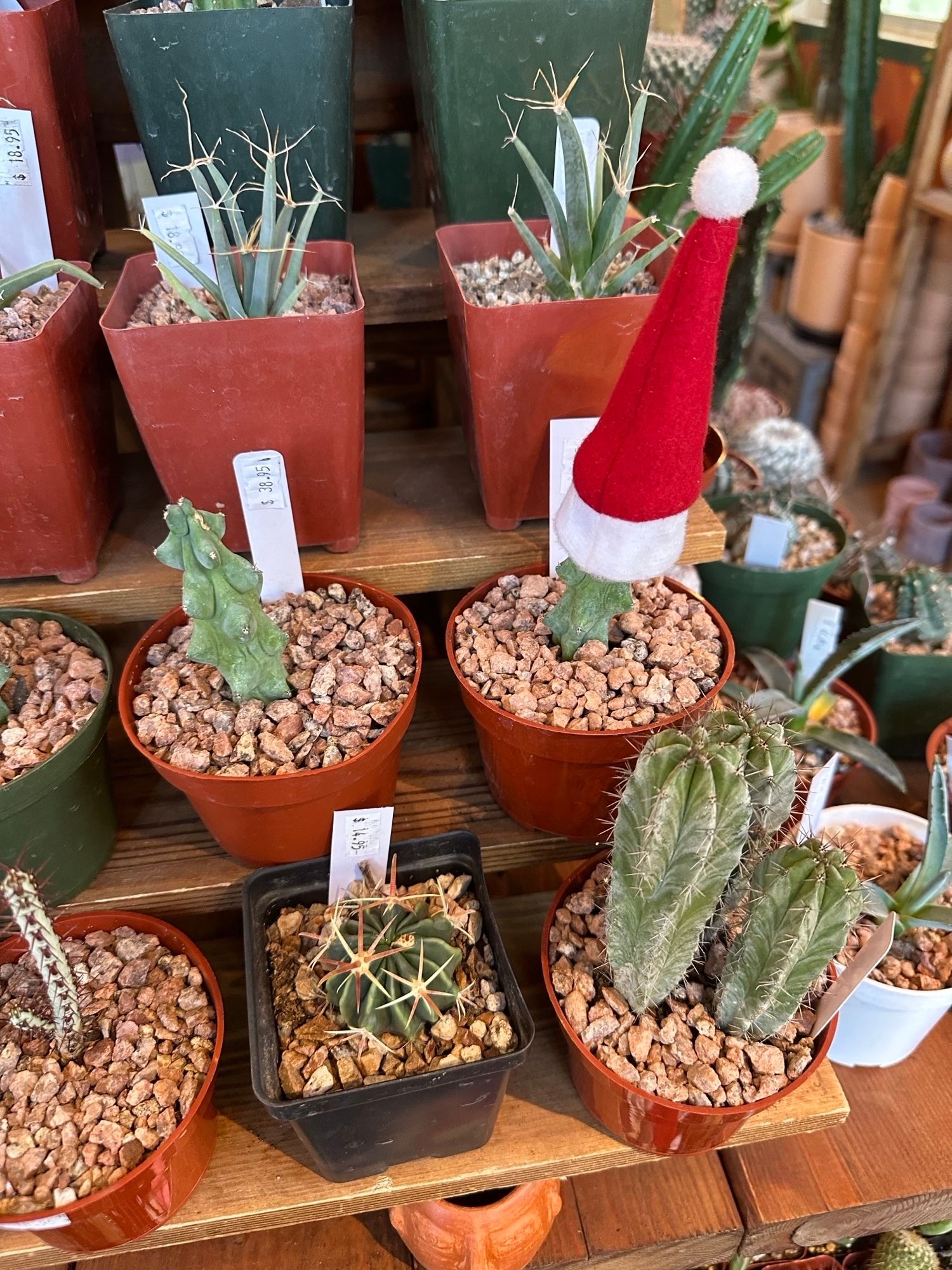
A display at Culdesac’s Maricopa Botanicals
The project has certainly helped bring this corner of Tempe to life, with new apartment complexes popping up nearby. In an unfortunate twist, these follow-on developments sometimes tout their proximity to the charmingly shaded and car-free retail amenities of Culdesac without asking their own tenants to give up their cars. What’s more, Culdesac’s location isn’t terribly walkable in a broader sense—beyond its in-house retail offerings, there’s just not a lot to reach by foot.
That means, rather than its reformist influence radiating out, helping seed the growth of more developments without resident parking, it has instead become a magnet for new projects that reproduce the status quo. In this respect, at least, its name has proved fitting: Culdesac is not so much blazing a new way forward as producing a largely self-contained and in certain ways self-referential experiment.
One curious note to conclude: Punch List is not the first publication to mount a critique along these lines. Strong Towns, a nonprofit advocacy group and media outlet promoting alternatives to conventional suburban development, posted a fairly harsh assessment of Culdesac Tempe in 2024, saying, according to a summary in Dwell, that it was a pale imitation of “the incremental urbanism and thickening our cities need. A dozen or even a thousand Culdesacs can’t solve that problem.”
But visitors to the Strong Towns site won’t find that post any longer. Instead, in its place, is the following message: “There used to be an article about Culdesac here. It was a poor representation of Strong Towns ideas, and we decided to retract it. We all have a hand in building strong towns, and it can take many different forms. We’re here to celebrate every effort.”
News & Notes
President Trump has appointed his original ballroom architect, James McCrery, and other allies to the Commission of Fine Arts, the “independent” agency charged with reviewing his White House plans. Despite having been replaced on the East Wing project by Shalom Baranes, McCrery (who served an earlier stint on the commission) and Trump “are still on good terms,” according to the New York Times. The commission is expected to take up the latest version of the ballroom design next week—and eventually to review the so-called Arc de Trump, featured in Punch List last week.
The first few months of 2026 include a bumper crop of significant architecture and design exhibitions, several of which I’ll be writing about here and elsewhere in the coming weeks. Already an ambitious show on Bruce Goff, “Material Worlds,” has opened at the Art Institute of Chicago, where it runs through March 29, while the Chicago Architecture Biennial, “SHIFT: Architecture in Times of Radical Change,” continues through the end of February. Other exhibitions on the horizon: “Memoryscapes” (unfortunate title) at the Louisiana Museum in Denmark, opening next week and featuring work by a pair of studios, ATTA—Atelier Tsuyoshi Tane Architects from Paris and Xu Tiantian’s Beijing-based DnA_Design and Architecture; “Drawing Worlds,” billed as the first U.S. exhibition on the 19th-century French visionary Viollet-le-Duc, curated by Barry Bergdoll and Martin Bressani and debuting Jan. 28 at Bard Graduate Center in Manhattan; a major reevaluation of the Shakers at ICA in Philadelphia, “A World in the Making,” opening Jan. 31 following an earlier run I was lucky enough to catch at the Vitra Design Museum; a show on Isamu Noguchi at Atlanta’s High Museum, opening April 10 and described as the artist’s “first design retrospective in nearly twenty-five years”; and, finally, a major look at the career of the late Frank Gehry, “The Century of Gehry,” opening May 29 at the Serralves Museum of Contemporary Art in Porto, Portugal.
Kriston Capps, writing in Bloomberg’s terrific Design Edition newsletter, calls our recent essay on L.A.’s halting recovery from the Palisades and Eaton fires “a profound indictment of the government failures that led to the disaster.”
See you next week!
Punch List is published weekly. Subscribe free here, or sign up for a paid subscription, with bonus material, here.
Email: [email protected]
Reply